
Skip to a section
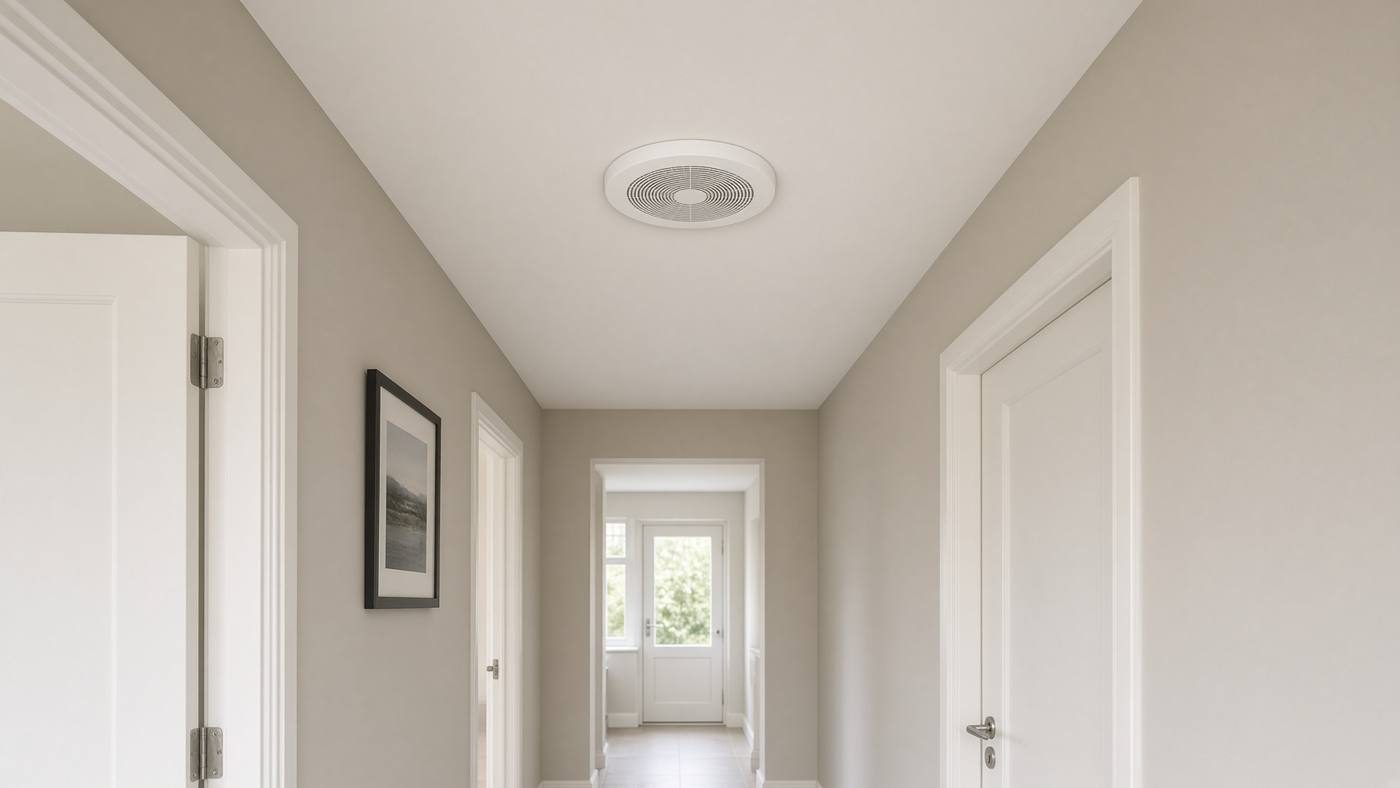
A PIV unit is a quiet fan. It brings filtered air into the house and lets the damp, stale air find its way out. In a house with a loft, it sits in the roof and blows down onto the landing.
People look for it when the windows stream every morning, when black spots keep coming back, or when the house feels stuffy even with a window open. It helps with condensation. It will not fix a leak.
Get piv systems quotes for your home
Find out which solution could be right for your property. One enquiry, passed only to companies who cover your postcode.
Problems homeowners run into
Windows streaming every morning
Moisture from sleep, cooking and showers lands on the cold glass. If the house never gets a steady change of air, wiping the windows is the routine. PIV is there to dilute that moisture in the background, including overnight.
Mould that comes back after you clean it
Cold corners, behind wardrobes and on external walls are the usual places. Still, humid air is what feeds it. Ventilation makes those surfaces less hospitable. The mould you can already see still needs cleaning, and a leak still needs a leak fixed.
A damp, musty house
Clothes in a wardrobe feel damp. The landing smells stale. The bathroom fan only runs while someone is in there. PIV is the background change of air the fan is not doing.
Condensation even with the windows on vent
Trickle vents help a little, and they are easy to leave shut. A loft unit pushes filtered air in all day so you are not relying on a window that has to stay open in January.
What the work actually is
A loft unit draws air from the roof space, or sometimes from outside through a duct, filters it, and pushes it in through a diffuser, often on the landing ceiling. The house sits under a slight positive pressure. Moist air finds its way out through trickle vents, gaps and fans.
The loft needs to be a sensible place to take that air from. A loft that is soaking wet, full of mould, or barely ventilated is a poor source. Filters need changing. Some units include a small heater so the air on the landing is less chilly. That is for comfort. It is not a heating system.
Flats and houses without a loft need a different arrangement, often a wall unit taking air from outside. A company who only fits loft units should say so, rather than force the wrong box into the wrong building.
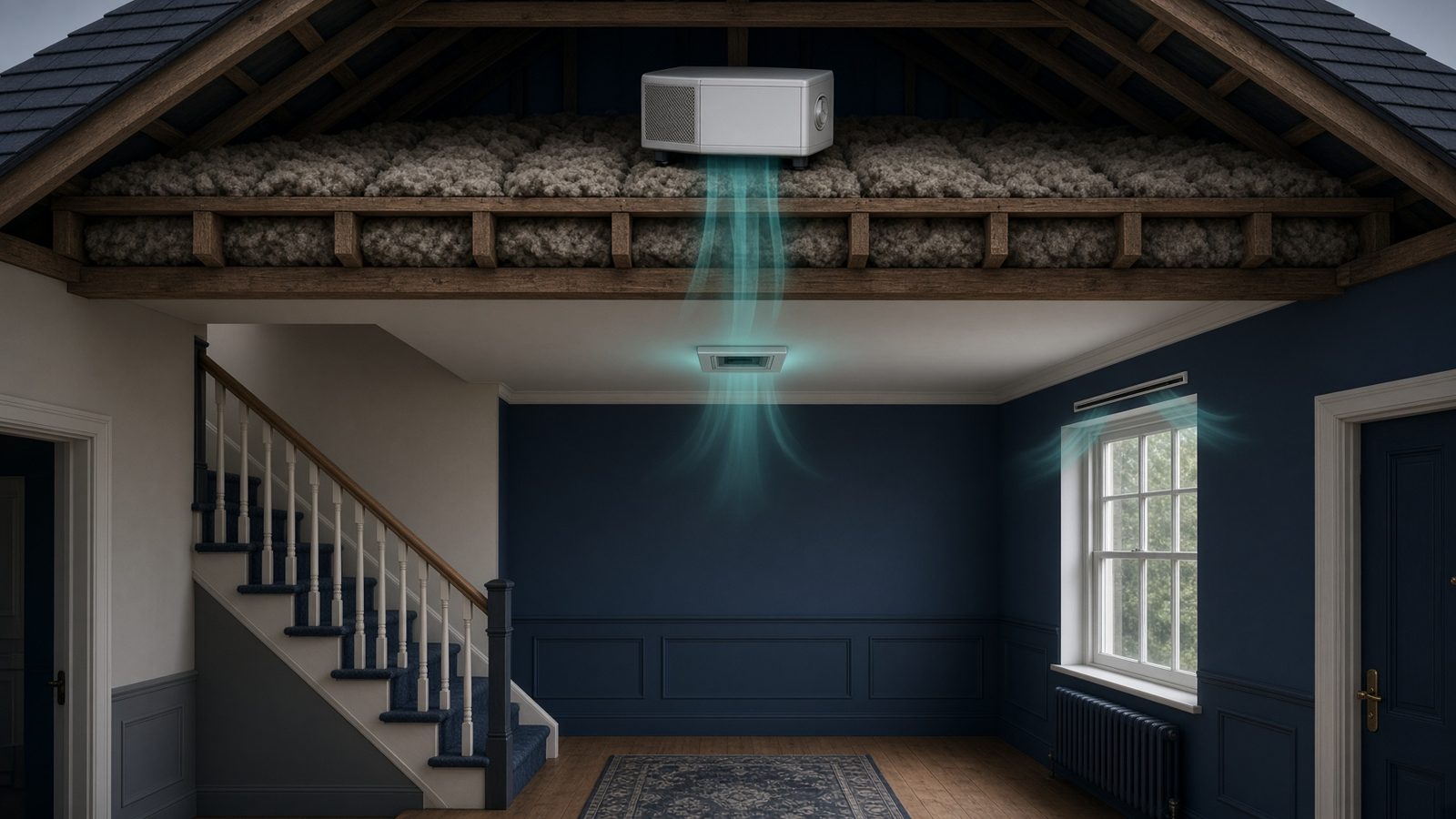
How a PIV unit moves air
The unit sits in the loft and pushes filtered air down into the house. Moist air leaves through the rooms. It is ventilation, not a cure for a leak.
Features, and what you gain
Aimed at condensation and stale air
A PIV unit quietly pushes fresh air through the house, so steaming windows and that musty smell have less to feed on.
It increases the value of your home
Damp, mould and streaming windows put buyers off. A drier home increases the value of your home.
Questions cover mould and current ventilation
We ask where you see mould, and what fans you already have, so the quote fits the house rather than a one-size unit.
Improved air quality helping breathing conditions
The unit filters the air it brings in and keeps it moving. Cleaner, fresher air is easier to live with, including for people who notice the air in the house.
Why a PIV quote is a small form for a daily difference
A positive input unit is a ventilation product, electrically installed by someone competent to do that work. The useful quote names the model, whether it has a heater, and that it is the right unit for a house or a flat.
Drier air is more comfortable, and you are less likely to be heating rooms just to dry the windows. It will not cure mould on its own, and it will not fix a leak. It can stop the same cold corners feeling damp every morning.
Ask what guarantee the installer and the manufacturer give, and who services the filter. Those two lines are worth more than a brochure.
Tell us which rooms stream up, and whether a system is already there. It takes a few minutes. Companies rated 4 stars or above who cover your postcode can say if a PIV unit is the right next step.
Compare your options
Take the first step towards improving your home. Tell us the property and we will match the enquiry.
Options, and the differences
None of these is automatically the right one. The company should say why a product suits this property, not just which one they prefer to fit.
Loft-mounted PIV
The usual house system. You get one unit, hidden in the loft. It needs a loft that is dry enough, and airy enough, to take the air from. A cramped, stuffy roof space is a poor start.
Units with a heater
A small heater takes the edge off air that would otherwise feel cool at the diffuser. It uses more electricity than the fan alone. It is not a replacement for the heating.
Wall-mounted units for flats
For homes with no loft. Air comes from outside through a duct in the wall. Planning, the lease and the freeholder can all matter in a flat. Ask before assuming it can go on the elevation you prefer.
Extract fans, left in place
PIV does not replace a bathroom or kitchen fan. Those fans remove steam at the source. A good brief keeps them, and may include fixing a fan that no longer works.
Is this right for your home?
Often a good fit
- Houses with condensation on glass and a usable, ventilated loft.
- Homes that feel stuffy, where background ventilation is the missing piece.
- Owners who understand existing mould needs cleaning, and that a leak is a separate repair.
Pause before you book it
- Damp from a roof leak, a failed gutter, rising damp or a wet cavity. Ventilation will not dry a fault that is still letting water in.
- A loft full of mould or with no airflow. Fix the roof space before using it as the air supply.
- A hope that one unit will silence every air-quality worry. It is a fan with a filter, not a medical device.
What homeowners can expect
The exact visit varies by company and by property. This is the shape of the job, not a promise that every provider works the same way.
- 01
You describe the condensation
Which rooms, whether you see mould, and whether a system or fans are already there.
- 02
We match installers
PIV providers who cover your postcode and meet the rating rule, if you consent to the share.
- 03
They check the cause
A proper visit separates condensation from a leak. If they find a leak, the PIV quote should wait.
- 04
They specify the unit
Loft or wall, with or without a heater, and where the diffuser will sit.
- 05
You compare quotations
Filter type, heater, electrics, and whether making good the ceiling is included.
- 06
Installation
Often a loft unit, a ceiling grille and an electrical connection. The exact visit depends on the provider. Access to the loft has to be real.
- 07
Living with it
Leave trickle vents open so the displaced air has a way out. Change the filter when the company tells you to. Wipe off mould that is already there, once the wall is dry enough to clean.
Happy with the brief?
Get a free, no-obligation quote. You decide who to speak to, and whether to go ahead.
Questions homeowners ask
What is positive input ventilation?
It is a continuously running fan that blows filtered air into the home, usually from the loft onto the landing. The slight pressure helps moist, stale air leave through vents and gaps. It is background ventilation, not a dehumidifier you empty each day.
Will a PIV unit cure mould?
No. It can reduce the humid air that lets surface mould return in cold corners. It does not remove mould that is already there, and it does nothing about mould fed by a leak or by rising damp. Clean what you can see, and fix any leak first.
Where does the air come from?
On a typical house system, from the loft, which should itself be ventilated from outside. Some units are ducted to a roof terminal. Flat units take air through an outside wall. The company should say which one they are quoting.
Can I have a PIV unit in a flat?
Often yes, with a wall-mounted unit, because there is no loft. The lease, the freeholder and the outside appearance can all restrict where it goes. Mention that you live in a flat when you enquire.
Will it make the landing cold?
The air coming in is cooler than the heated house, so you can feel it near the diffuser. A unit with a heater softens that. It should not be confused with the heating system, and it should not be used as a reason to block the vents the air needs.
Does PIV replace a bathroom fan?
No. Steam from a shower is best taken out at the bathroom. PIV is the slow, whole-house change of air. Many homes need both.
What if the loft is dusty, damp or mouldy?
Do not use that loft as the air source until it is understood. A damp loft can mean a roof problem. A filter is not a reason to blow poor air into the bedrooms.
How noisy is a PIV unit?
They are designed to run in the background, not as a kitchen extract. How noticeable one is depends on the model, the speed and the mounting. Ask to know the model, and ask where the diffuser will sit relative to bedrooms.
Do I still need to wipe existing mould?
Yes. Ventilation changes the conditions going forward. It does not scrub the wall. Once any leak is fixed and the surface is dry, clean the growth with a method you are happy to use in that room.
Is PIV right if I already know there is a leak?
No. Stop the water first. A fan will not dry a roof leak, a failed gutter or a wet chimney stack. Tell us about the leak so the company does not sell you ventilation for a repair.
Why request the quote through DwellUp?
DwellUp does not fit the work and does not set the price. We introduce you to companies that are active, cover your postcode or work nationwide, offer this service, and hold at least 4 stars on Google Reviews or Trustpilot. You choose who to use. There is no fee from us to send the enquiry, and no obligation to go ahead.
Our offer
£100
Get £100 on us
£100 off your next home improvement upgrade when you enquire through DwellUp.
Ends 19 December 2026
2 years
Workmanship warranty
We are confident in the companies we introduce, so their workmanship is covered for 2 years.
Included, at no cost
The same jobs come up in terraces, semis, bungalows and newer estates. We do not run a different service for each town. The match is your postcode, the trade, and the rating rule. If you want the fuller picture, read why choose us.
Start your piv systems enquiry
It takes a few minutes. You can add another service before you send it.