
Skip to a section
The heat you pay for rises. If the loft is bare, or only has a thin patchy quilt, that heat leaves through the ceiling and the bedrooms stay cold. A proper layer over the joists keeps it in the rooms.
It is the right job when you can get into the loft and the roof is dry. It will not fix a leaking roof, and it will not warm a room that is cold for a different reason.
Get loft insulation quotes for your home
Find out which solution could be right for your property. One enquiry, passed only to companies who cover your postcode.
Problems homeowners run into
Draughts from the loft
Cold air drops through the hatch, the pipe holes and any gap in the quilt. The landing feels it first. A continuous layer, with the hatch sealed, is what stops that fall of cold air.
Expensive heating bills
Heat rises. If the ceiling under the loft is bare or only thinly covered, the boiler or heat pump keeps replacing warmth that has already left the bedrooms. A proper quilt is there so the heating is not doing that all evening.
Excessive condensation
A cold ceiling and a cold loft are where moist air from the house settles. You see it as damp felt, water on the roof timbers, or mould near the hatch. Insulation warms the ceiling. The eaves still have to stay open so the loft itself can breathe.
A low EPC
A missing or shallow loft is one of the first things an assessor marks down. Topping the loft up is a common recommendation on the certificate. It will not, on its own, jump a house several bands if the walls and windows are also poor.
Bedrooms that never match downstairs
Downstairs can feel fine while the top floor stays cold, because that is the floor under the roof. The quilt is the job for that gap, not another hour on the thermostat.
What the work actually is
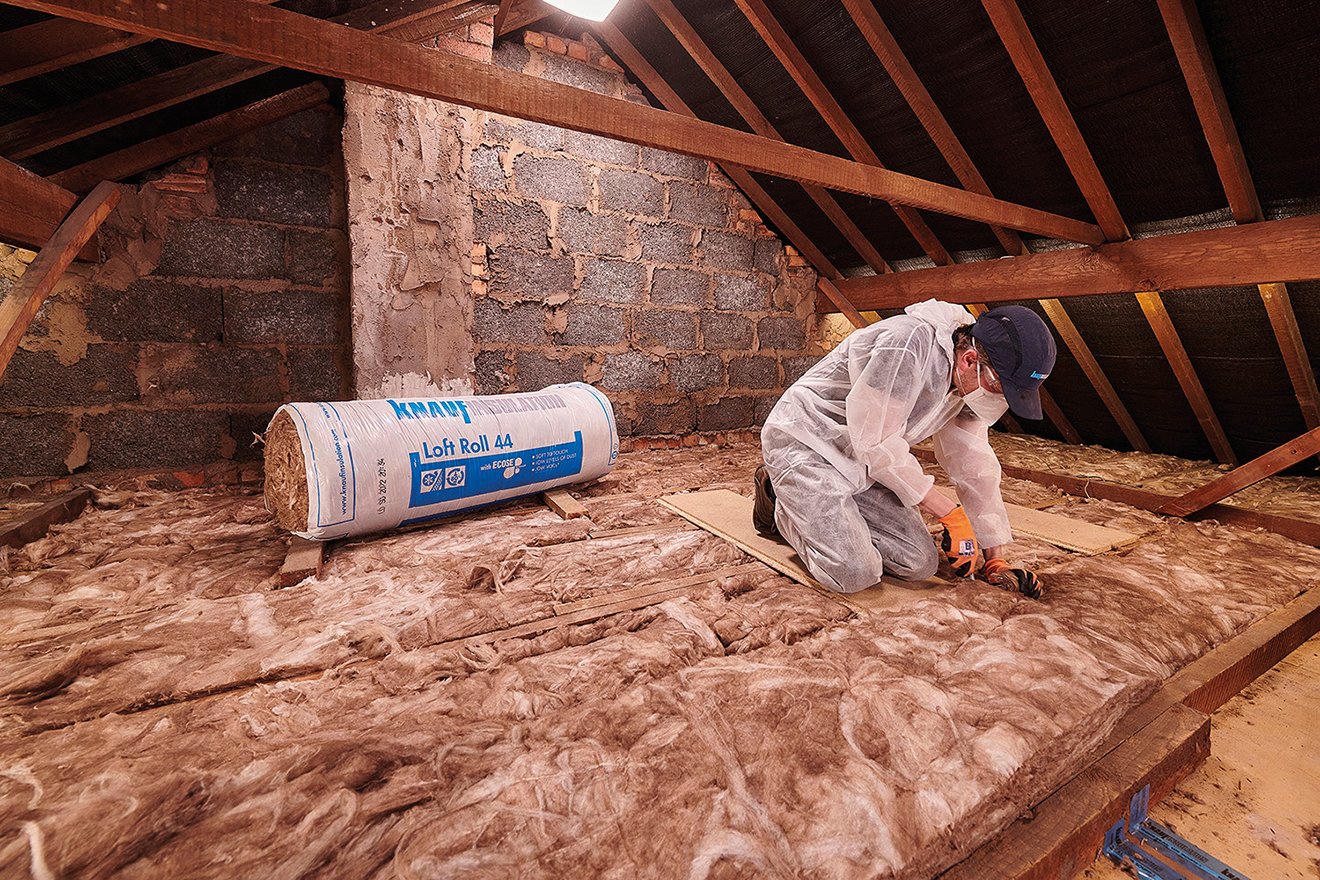
On a standard cold loft, insulation sits at ceiling level. The usual build is a layer between the joists and a second layer laid across them, so the timber is covered as well as the gaps. The loft above that layer stays cold. The rooms under it hold heat for longer.
Guidance in England, including the Energy Saving Trust and Approved Document L, is widely quoted as about 270mm of mineral wool for that kind of roof, often described as 100mm between the joists and the rest across the top. The right depth depends on the product. A denser roll needs less thickness than a poorer one to do the same job, so the quote should name the product and the finished depth, not just “insulate the loft”.
A warm loft is different. There the insulation follows the rafters, and the roof space itself stays warmer.
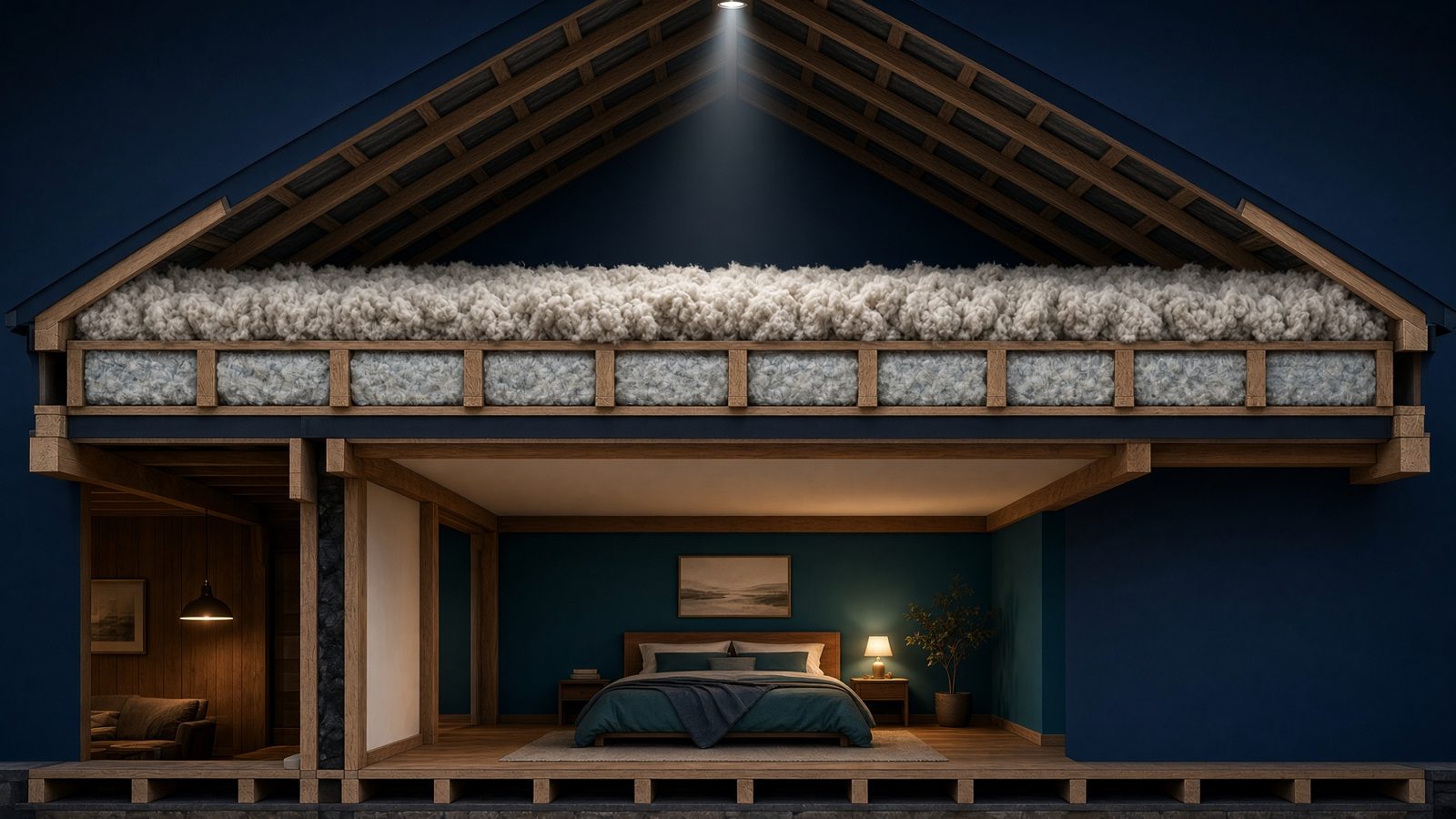
Where loft insulation sits
Wool goes between the ceiling joists, then a second layer across the top. The loft above stays cold. The rooms below hold the heat.
Features, and what you gain
A more even top floor
Slowing heat loss through the ceiling is the point of the job. Bedrooms that were losing heat upwards often feel less dependent on the heating being on all evening. How noticeable that is depends on the rest of the house.
Lower heating bills
Heat that stays in the rooms is heat you do not have to pay for again. A loft that was losing warmth all evening is one of the clearer ways to bring the heating bill down. How much depends on the house and how you heat it.
It increases the value of your home
A warmer, better-insulated house is easier to live in and easier to sell. Buyers and surveyors look at the loft. The work increases what the property is worth.
A quote that says first-time or top-up
Topping up 100mm is a different job from starting on bare joists, and different again from lifting boards. You should be able to see which one you are being quoted for.
The hatch and the edges treated as part of the job
A thick quilt with a draughty hatch and bare eaves still underperforms. Ask whether the hatch will be insulated and sealed, and whether the eaves stay ventilated.
Why a loft quote is worth sending
Mineral wool used on a cold loft is a familiar UK product, and a proper job aims at the depth used in current guidance, often talked about as around 270mm. The quote should name the product and the finished depth.
Less heat leaving through the ceiling is the practical benefit. Bedrooms feel more even, and the heating does not have to work as hard to hold the top floor. That is how a loft can show up on the energy bill. We will not invent a percentage for your house.
Ask the company what guarantee they give on the workmanship. The product maker’s cover and the installer’s cover are not the same thing, and both should be in writing.
If the loft is cold, boarded, or you are simply not sure what is up there, tell us in a couple of minutes. We match the enquiry to companies rated 4 stars or above who cover your postcode. You choose who to speak to.
Compare your options
Take the first step towards improving your home. Tell us the property and we will match the enquiry.
Options, and the differences
None of these is automatically the right one. The company should say why a product suits this property, not just which one they prefer to fit.
Mineral wool rolls
Glass or rock wool is the usual material for a cold loft. It is quick to lay, it covers awkward corners, and the cross-layer detail is well understood. It must not be packed so tight that eaves ventilation is blocked, and it should not be left soaking wet.
Loose-fill or blown insulation
Useful where the loft is hard to crawl, or where joist spacing is uneven. The finished depth still has to be checked, and boarding later is harder because there is no firm roll to lift.
Rigid boards
PIR or similar boards are thinner for a given level of insulation, so they are often used when you want to board the loft for storage or insulate between rafters. They cost more to fit than a roll, and gaps at the edges matter.
Spray foam
DwellUp does not recommend spray foam for residential properties. News reports, including the BBC and ITV, have shown the problems it can cause. It can hide the roof timbers, trap moisture, and make a home harder to sell or remortgage. It is not a shortcut for a loft quilt.
Is this right for your home?
Often a good fit
- An accessible loft with a dry roof and joists you can work across.
- A home with little or no insulation, or a single old layer you want topped up.
- Owners who can clear a path for the installer, or who are happy for boarding to be lifted and relaid properly.
Pause before you book it
- A roof that is leaking or has rotten timbers. Fix that before you cover the ceiling.
- A loft you want to use as a room. That needs a rafter-level design, not a deeper quilt on the floor.
- Recessed lights or cables that are not safe to cover. The installer should deal with those, not bury them.
What homeowners can expect
The exact visit varies by company and by property. This is the shape of the job, not a promise that every provider works the same way.
- 01
You tell us about the loft
The enquiry asks what you can see, access, and whether the loft is boarded. You do not need to measure the depth yourself.
- 02
We match the enquiry
Active insulation companies who cover your postcode and meet the 4-star rule can receive it, if you consent.
- 03
The company looks at the loft
They should check existing depth, hatch, eaves ventilation, tanks, pipes and anything that cannot be covered.
- 04
You get a recommendation
Top-up, new layer, boards on stilts, or a different brief if the loft is not a cold-roof job.
- 05
You receive their quotation
The price is theirs. Compare what is included, especially the hatch, the eaves and any boarding.
- 06
They install
Most cold-loft jobs are done from inside the loft. Pipes and the tank in that colder space need lagging, and the tank should not be insulated underneath, so a little warmth from below can still reach it.
- 07
You keep the paperwork
Ask for the product and the depth fitted. That is what a later buyer or assessor will ask about.
Happy with the brief?
Get a free, no-obligation quote. You decide who to speak to, and whether to go ahead.
Questions homeowners ask
How thick should loft insulation be in the UK?
For a normal cold loft, about 270mm of mineral wool is the depth most people are told to aim for. That lines up with Energy Saving Trust guidance in England. The product matters. A better roll can be a bit thinner, and a poorer one needs to be thicker. Ask the quote to say the finished depth.
What is the difference between a top-up and a new loft insulation job?
A top-up adds to insulation that is already there, often a cross-layer over an old 100mm quilt. A new job starts from bare or ruined material. If the old layer is wet, mouldy or contaminated, it may need to come out rather than be covered.
Can you insulate a boarded loft?
Yes, but the boards usually have to come up. If you still want storage, the usual answer is to raise the boards on supports so the full depth of insulation sits underneath, instead of crushing a thin layer.
Will loft insulation stop condensation on my windows?
Not reliably. Window condensation is often about moisture from cooking, showers and breathing, and about cold glass. Loft insulation changes heat loss through the ceiling. Ventilation, including extract fans or a system such as PIV, is the conversation for streaming windows.
Should I insulate the rafters or the loft floor?
Insulate the floor if the loft is only for storage and can stay cold. Insulate the slope if you need the roof space to be warm, as in a dormer or a room in the roof. Doing both, and sealing the loft, can stop the cold roof from ventilating properly. The company should pick one approach.
What happens to pipes and the cold-water tank?
Once the ceiling is insulated, the loft gets colder. Pipes above the insulation need lagging. A cold-water tank is normally insulated on the sides and top, not underneath, so heat from the house can still reach the base and reduce the chance of freezing.
Is spray foam a good idea?
No. DwellUp does not recommend spray foam for residential properties. It can hide the roof timbers and trap moisture, and news reports have shown homes that became harder to sell or remortgage. A mineral-wool loft is a different job.
Do I need to empty the loft?
You need a safe working area. Small amounts of storage can often be shifted to one side. A loft packed to the hatch will slow the job and may be excluded from the quote. Say how full it is when you enquire.
Will insulation fix every cold room?
No. Draughty windows, an uninsulated bay, a cold wall or a heating system that does not reach that room will still matter. Loft insulation deals with heat leaving through the top-floor ceiling.
Does DwellUp fit the insulation?
No. We take the enquiry and, with your consent, pass it to insulation companies who cover your area and meet our rating rule. They survey, quote and carry out the work.
Why request the quote through DwellUp?
DwellUp does not fit the work and does not set the price. We introduce you to companies that are active, cover your postcode or work nationwide, offer this service, and hold at least 4 stars on Google Reviews or Trustpilot. You choose who to use. There is no fee from us to send the enquiry, and no obligation to go ahead.
Our offer
£100
Get £100 on us
£100 off your next home improvement upgrade when you enquire through DwellUp.
Ends 19 December 2026
2 years
Workmanship warranty
We are confident in the companies we introduce, so their workmanship is covered for 2 years.
Included, at no cost
The same jobs come up in terraces, semis, bungalows and newer estates. We do not run a different service for each town. The match is your postcode, the trade, and the rating rule. If you want the fuller picture, read why choose us.
Start your loft insulation enquiry
It takes a few minutes. You can add another service before you send it.